
Master Teen Patti · The three-card game
Teen Patti rules: follow your first round
Begin with three cards and follow the choices that keep a hand moving. This walkthrough explains common classic play; use the selected table’s rules for amounts, eligibility and exceptions.
A game-rules guide · Examples describe common play


Master Teen Patti
Master Teen Patti
The game at a glance

How a round works
- Before the deal, players make the boot contribution required by the table. The dealer gives each player three cards. Those three cards form the hand being compared.
- Imagine that you have not looked at your cards yet: you are blind. Looking at them makes you seen. Your permitted contribution can depend on that choice, so read the amount before acting.
- When your turn arrives, a chaal continues participation under the table’s limits. Packing ends your participation in this hand; it is not a request to replace a card.
- Suppose three players began and one packs. The other two remain, but that alone does not explain every show rule. Check who may request the comparison and its required contribution.
- A hand can end when the others pack or when an eligible show compares the remaining cards. For a comparison, check the category first, then the relevant ranks within that category.
Hand rankings: highest to lowest
| Hand | Description |
|---|---|
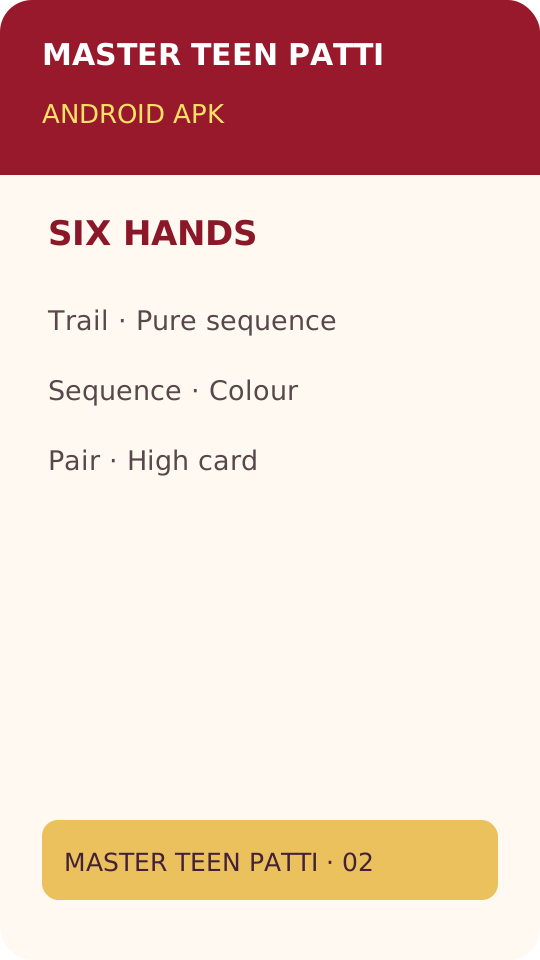
| Trail / trio | Three cards with the same rank. A♠ A♥ A♦ |
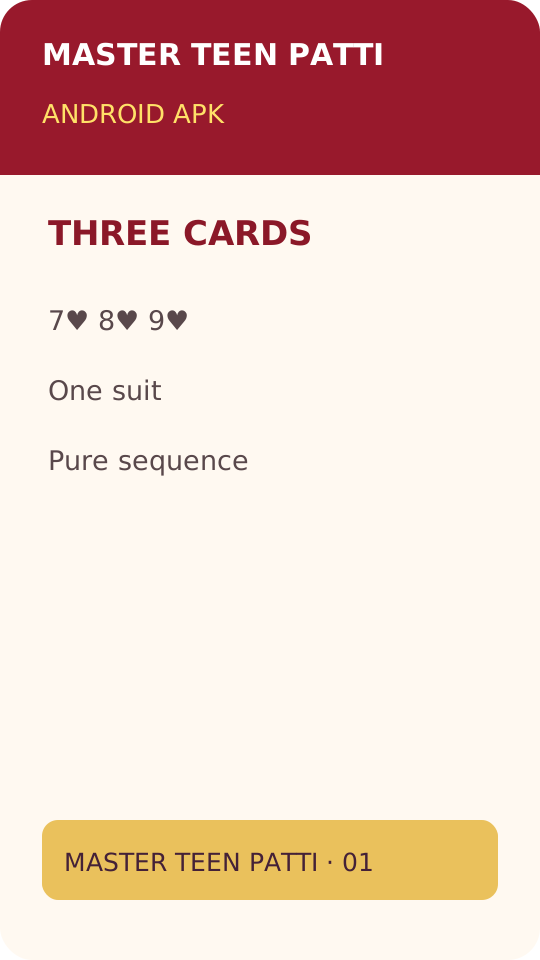
| Pure sequence | Three consecutive cards, all in one suit. 7♥ 8♥ 9♥ |
| Sequence / run | Three consecutive ranks with mixed suits. 4♠ 5♥ 6♦ |
| Colour / flush | Three cards in one suit, without a sequence. 2♣ 7♣ J♣ |
| Pair | Two cards with the same rank. Q♠ Q♥ 4♦ |
| High card | A hand outside the categories above. 2♠ 6♥ J♦ |
Rules that vary by table
The baseline order
For a first comparison, use trail, pure sequence, sequence, colour, pair and high card. If two hands share a category, the relevant ranks decide before you consider the table’s tie rule.
Ace ordering
A–2–3 and A–K–Q both raise an ace-order question. Find the published order before comparing them. K–A–2 is not assumed to wrap around into a run.
Reversed rankings
In a low-hand variation such as Muflis, your classic-order shortcut may give the wrong result. Identify the exact ranking convention before applying a strong-hand example.
Wild-card hands
A joker changes what a card can represent, so a natural-hand example may no longer be enough. Confirm the wild cards, permitted substitutions and tie treatment for that table.
Show and sideshow
The words describe comparisons with different conditions. Do not assume a sideshow is available whenever you can request a show; check the participating players and the table’s eligibility rules.
Before you take a seat
- Read the full hand order before the first round.
- Check the action amount before confirming a chaal.
- Check when a show is permitted and how a tie is resolved.
- Choose a stopping time in advance and take breaks.
Tables, stakes and timers
Before an action, identify the amount for this turn and the limit for the whole hand. They answer different questions. A timer explains how long you have to act; it does not reveal the maximum contribution. These values must come from the table you actually select.
Understanding fairness claims
These diagrams teach how to compare a hand, not how the Android product deals its cards. A file hash cannot describe the shuffle or randomness. If the operator publishes an audit, read which product, version and behaviour it covers before relying on the claim.
Common mistakes
- Mixing up a pure sequence and a sequence: only the pure sequence requires one suit.
- Treating three cards of one suit as a sequence when their ranks are not consecutive.
- Assuming blind and seen players can take exactly the same actions.
- Reading a previous hand as a guarantee about the next one.
Common table terms
- Boot
- The starting contribution before cards are dealt.
- Chaal
- A contribution on your turn to stay in the hand.
- Blind / seen
- Playing without viewing your cards / playing after viewing them.
- Pack / fold
- Leaving the current round.
- Show
- Comparing eligible remaining hands under the table’s rules.
Master Teen Patti FAQ
Why can 4–5–6 beat an ace-high hand?
The sequence category ranks above high card in common classic play. Compare the type of hand before comparing its highest card.
Does looking at the cards change their rank?
No. Blind and seen describe whether you have looked; they affect permitted actions or contributions under the table rules, not the printed ranks of the cards.
Where can I practise comparing hands?
Read the worked comparisons in the hand-ranking guide. They explain the outcome using the cards shown; no installed app or account is needed to read them.
Do these examples describe a verified APK feature?
They explain the card game. The product page and download record separately describe the supplied Android file and what remains unconfirmed.


