
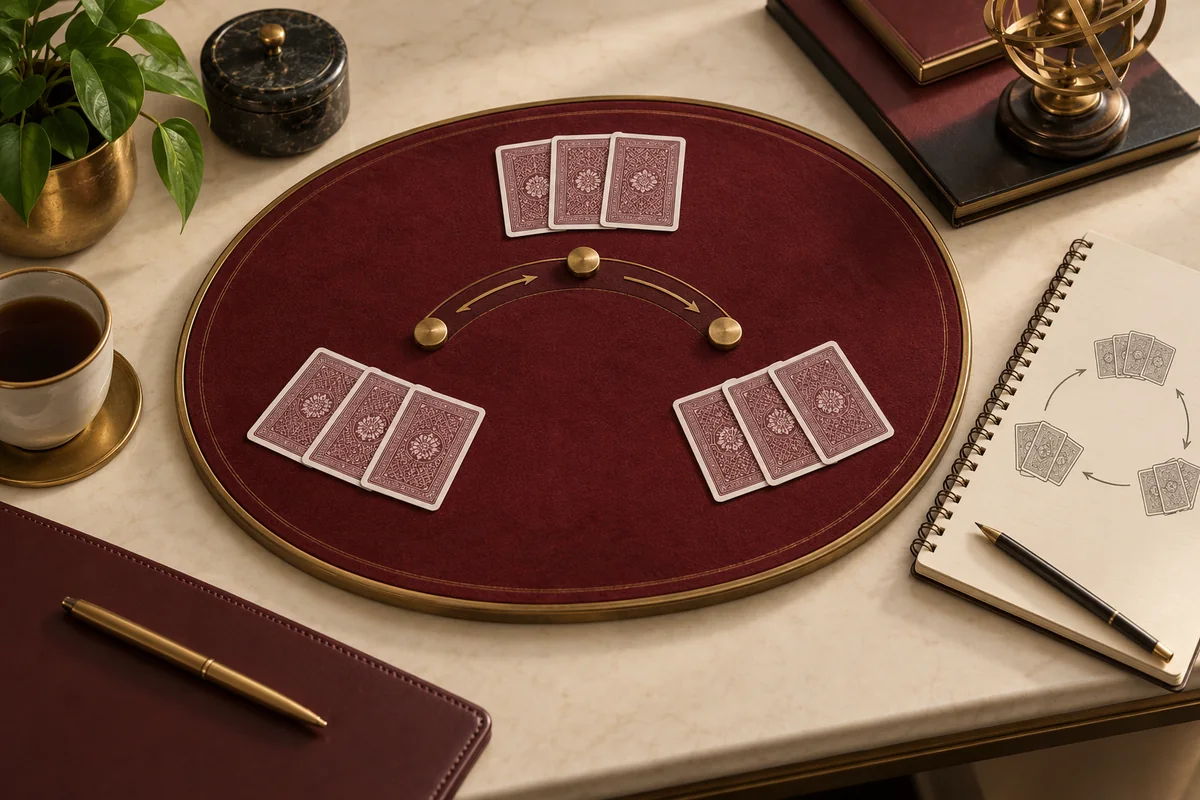
Illustration for this guide; not an app screenshot.
Imagine three seats: A, B and C. This is a reading exercise with no money amounts and no claim about an app’s buttons or available modes. Its purpose is to help you recognise what has changed at each stage of a classic hand.
Before the deal
All three players read the table’s entry and boot rules, turn order, limits and show conditions. Boot is the starting contribution required by that table, not a promise about the total cost of continuing. The dealer gives each seat three cards. A player’s cards are private until the rules call for a comparison.
Looking changes the player’s status
A has not looked at the cards and is blind. B looks and becomes seen. That difference can affect the contribution needed to continue, according to the table rules. It does not change the rank of the cards themselves. C must follow the turn and eligibility rules rather than copying another player’s action without checking.
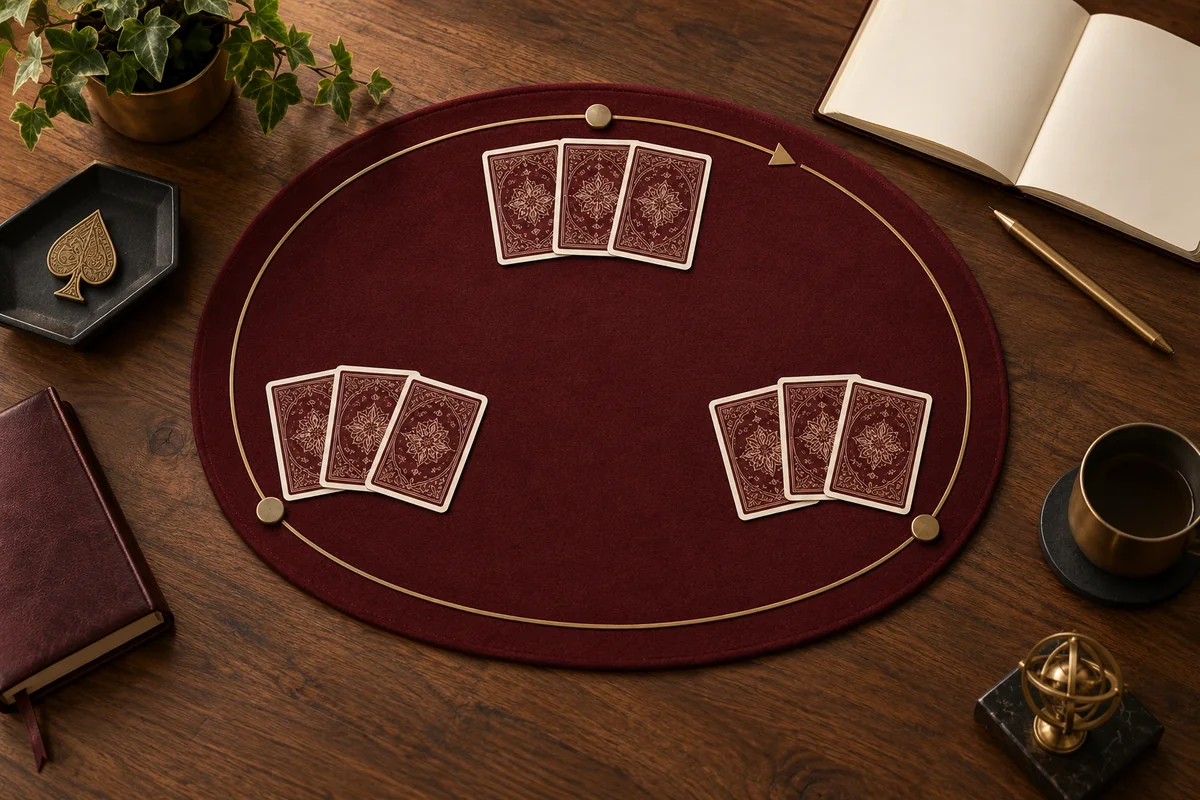
Packing removes a player from this hand
Suppose C packs. C is no longer competing for this hand; the remaining players continue under the table rules. If B later packs too, A wins because nobody else remains. This outcome does not demonstrate that A held stronger cards. Distinguish a win by everyone else leaving from a win after comparing hands.
When an eligible show happens
If the remaining players reach a permitted show, compare hand categories first and then the relevant ranks. Do not assume that having two players left automatically permits every kind of show. After the result, reset the example for the next deal. You should now be able to explain who is active, who has looked and why the hand ended.
Read the full rules and hand-ranking reference.
Compare a final show with a sideshow while the round continues.
Follow a paper round without choosing stakes
Use three imaginary seats, A, B and C, to practise reading a round. Write the agreed turn order at the top of the page. Mark the starting contribution as completed without assigning a money value. Draw three face-down cards at each seat. At this point, you have recorded the setup, not a prediction about who will win. Keeping the amounts out of this exercise makes it easier to focus on the vocabulary and sequence of events.
Suppose A looks at their cards when the example’s rules permit viewing. Update A’s information state to seen. Leave B and C unchanged because A looking does not mean that everybody has looked. Then imagine B packs on an eligible turn. Cross B out of the active-seat list for this hand. Do not remove B’s name from the whole session or write that their earlier contribution has returned; neither follows from the simple statement that B packed.
Now pause the paper exercise. Two seats remain active, but you still need the applicable comparison rule before deciding which action is available. The worksheet should therefore say “check show eligibility”, not automatically “press show”. A careful walkthrough records what has actually happened, identifies the next rule question and avoids filling missing conditions with an assumption.
Keep a state ledger instead of memorising the screen
A simple ledger can have columns for seat, active or packed, blind or seen, and last recorded action. Update only the fields affected by an event. Looking changes the information field. Packing changes whether that seat is still in the hand. A comparison, when permitted, adds its own result. This approach prevents one action from being treated as though it changed every part of the game at once.
For example, after A has looked and B has packed, C may still be active and blind in the paper example. Do not mark C as seen merely because two active players remain. Also do not infer the category of C’s hidden cards from that state. The active-seat count, information state and hand category answer different questions. Keeping them in separate columns makes those differences visible.
Try asking a friend to reconstruct the sequence using only the ledger. If they cannot tell whether B packed before or after A looked, add an event number rather than a long paragraph. If they assume that everybody saw A’s cards, clarify that the event was A viewing their own hand. Good notes make uncertainty visible. They do not need to reproduce a particular app interface, and they should never be presented as a tested recording of the Master Teen Patti APK.
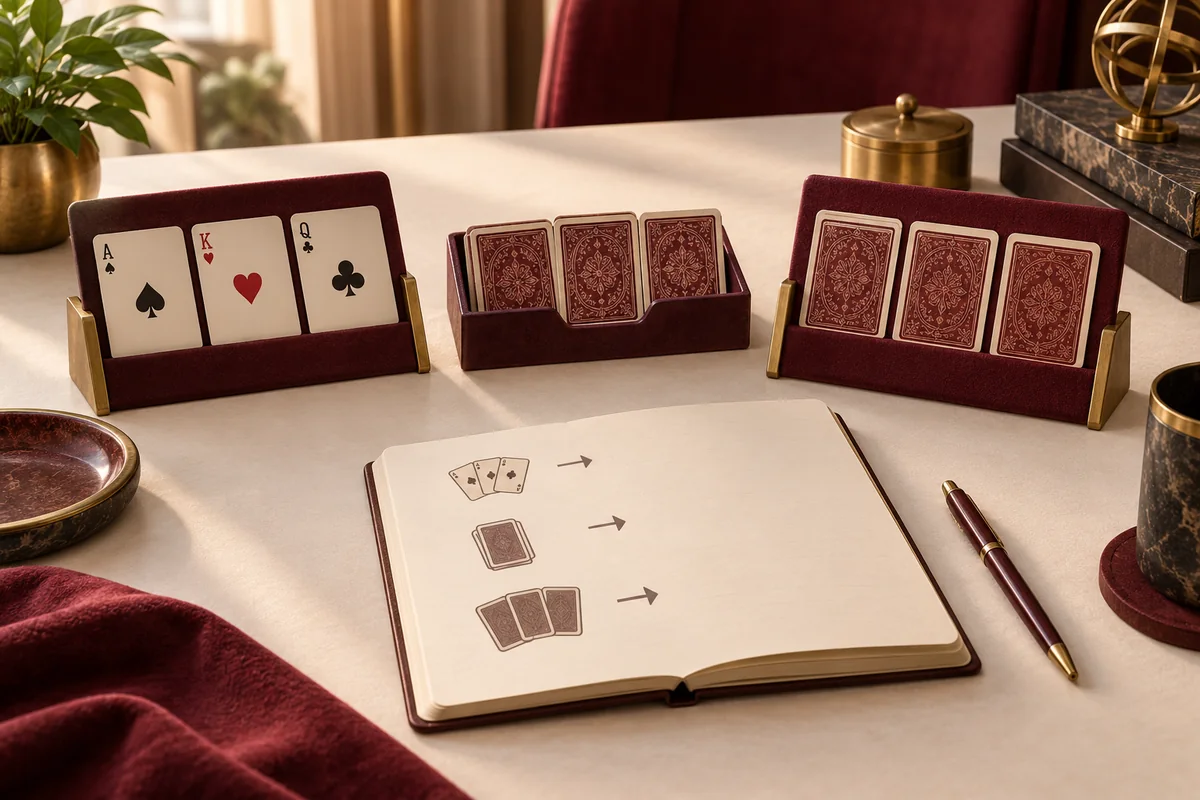
Review the hand with three separate questions
At the end of a practice sequence, first ask whether the events were allowed by the chosen rules. Was viewing permitted at that point? Was the comparison action eligible? This is a rules question. Next ask which cards were compared and how their categories and ranks were read. That is a hand-comparison question. Finally ask what the example can tell you about a real product. Unless the exercise used verified product evidence, it tells you how to read the concepts, not how the APK behaves.
Here is a useful self-check. If you can explain the hand rankings but cannot say which seats were still active, revisit the event ledger. If you can follow the turns but keep confusing a sequence with a colour, use the illustrated ranking guide. If an unfamiliar word interrupts the explanation, use the glossary rather than guessing from a nearby button. Each missing piece has a different reading route.
To make a second exercise, change just one event. Let a different seat look, or change which seat packs, while leaving the written rules fixed. Then update the ledger and identify which later questions change. This is a way to practise comprehension, not a recommendation to make those choices during play. Stop when a rule is missing, write the question down and find its source before continuing the example.
Sources & scope
Further reading checked on 12 October 2026.
Editorial topic

Diya Kapoor
Diya works on game terminology and English–Hindi explanations, connecting words such as boot, chaal and pack with the actions they describe.